Is reformer Pilates safe in pregnancy?
For most women with a straightforward pregnancy, yes: the NHS says exercise is safe for you and your baby in pregnancy, and reformer Pilates can be adapted to every stage. If you have a health condition or any complications, check with your midwife or GP first, and always tell your instructor you're pregnant.
By Alessia Barone, Pilates instructor and personal trainer, trained with Balanced Body and Active IQ. Updated .
What the NHS says
The NHS says exercise is safe for you and your baby in pregnancy, that it's usually fine to keep doing activities you already do, and that anything new should start gently. It recommends aiming for 150 minutes of moderate activity a week, including two sessions of muscle strengthening. One or two Pilates sessions can cover the strengthening part.
If Pilates is new to you, start small and build up slowly. The NHS advises against starting a new vigorous activity in pregnancy, so early sessions focus on breathing, the pelvic floor and simple strength work.
What changes on the reformer
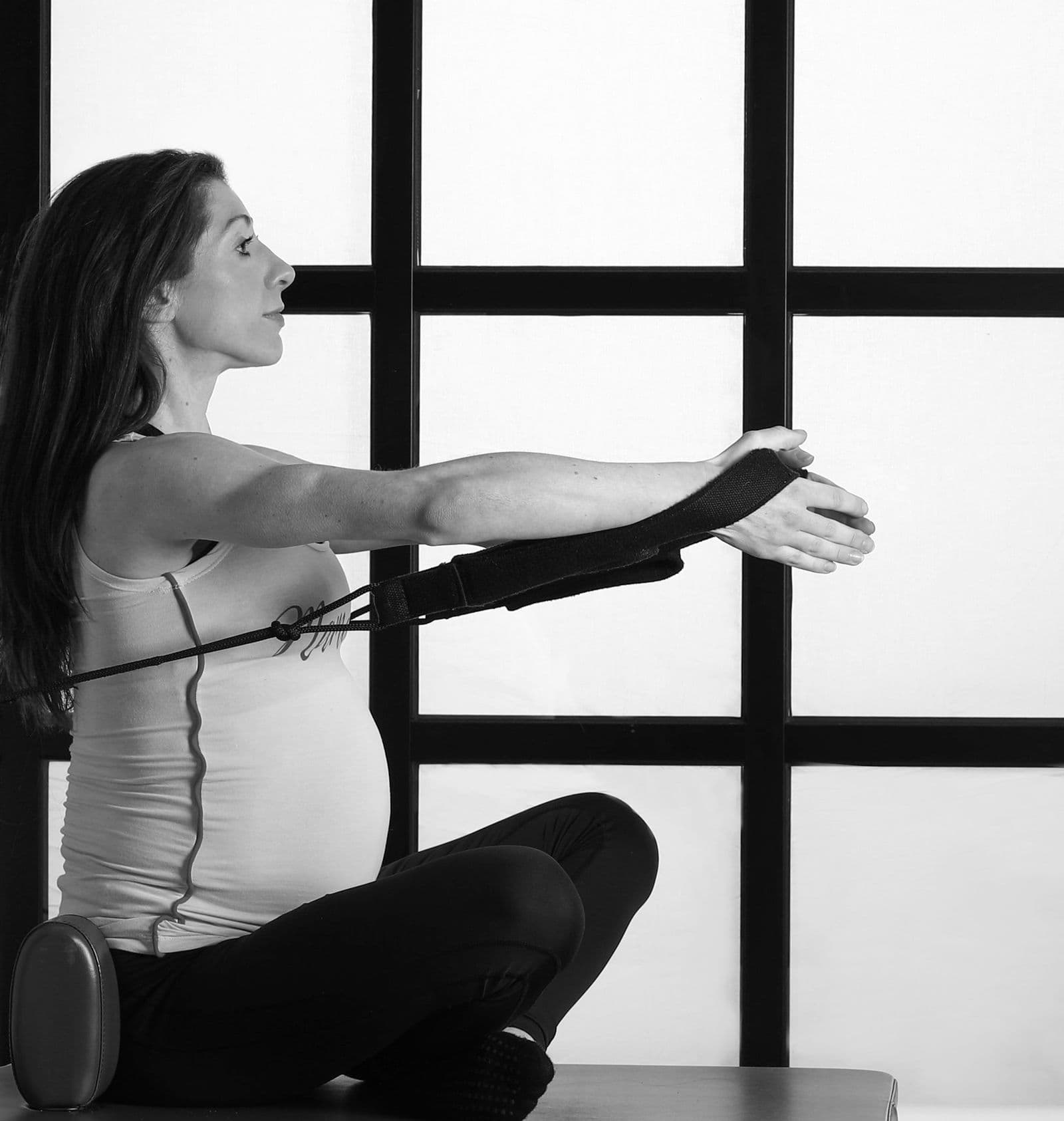
A reformer is a sliding carriage worked against springs, so I can make each exercise lighter or harder and set it up for your height and your stage. That's what makes it so easy to adapt as your body changes, trimester by trimester.
- Positions: in later pregnancy the NHS advises avoiding anything that has you lying flat on your back for more than a few minutes, as it can make you feel dizzy and isn't good for your baby. Work moves to side-lying, seated, kneeling and standing.
- Effort: moderate means you can talk but not sing, which is the NHS's own test. Nothing is pushed to the limit.
- Focus: breathing, the pelvic floor, and strength in your legs, hips and back for a posture that is changing.
- Getting on and off: slowly and with support, as your balance shifts with your bump.
When to stop
Stop if you feel uncomfortable, too hot or unwell, as the NHS advises. Drink water, keep cool and don't exercise on an empty stomach.
If you have pain, bleeding or anything else that worries you, stop and contact your midwife or GP.
How sessions with me work
Before your first session you complete a prenatal health questionnaire. If anything needs checking, I'll ask you to speak to your midwife or GP first. Each session is 60 minutes, one-to-one, in my private studio room in South Kensington or, for women, at home, and I plan it around how you feel that week.
I'm a mother myself, and I practised Pilates through my own pregnancy.
This page follows:
- NHS: Exercise in pregnancy
- UK Chief Medical Officers: Physical activity in pregnancy and after childbirth
General information, not medical advice. Check with your midwife, GP or a physiotherapist about your own situation.